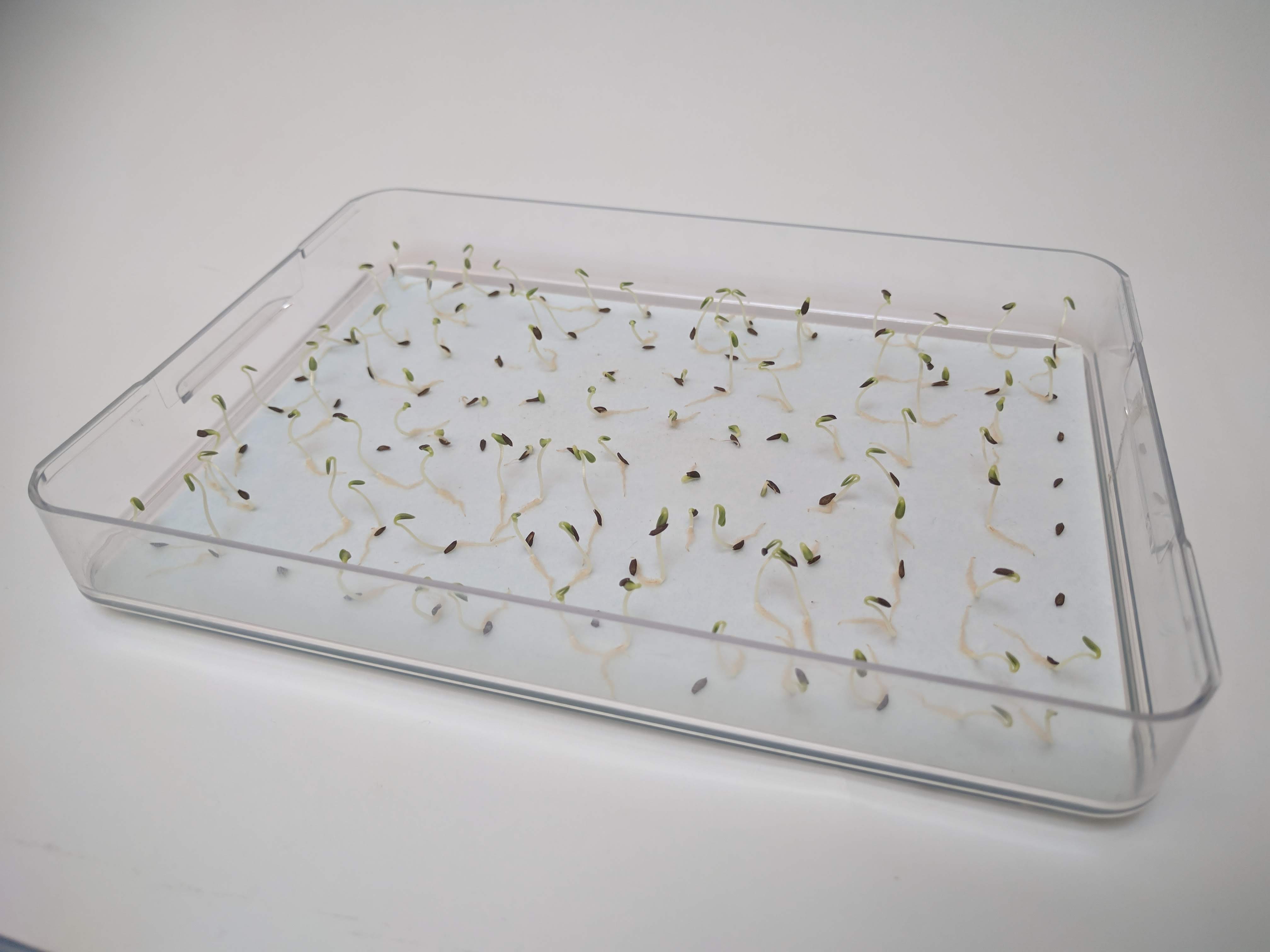
Seed-dispensing guide · Germination & seed DNA prep
The latest info on seed dispensing
A practical guide to dispensing seeds for germination assays and seed DNA extraction, and the modular mesh-plate dispensers that load trays, plates and tubes fast, accurately and the same way every time.
~30s
Per 100-seed tray
100
Seeds per action
120+
Seed types handled
85+
Mesh plate types
Quick reference
Seed, germination & grinding reference
The tables labs come back to: how to space and germinate each seed, which substrate to sow on, and which beads and speed to grind with for seed DNA.
Seed spacing & sowing distance by seed type
| Seed type | Seed size | Spacing on tray | Sowing depth |
|---|---|---|---|
| Arabidopsis thaliana | 0.3–0.5 mm | 3–5 mm | Surface (needs light) |
| Lettuce | 1–2 mm | 8–10 mm | Surface (needs light) |
| Brassica & cabbage | 1.5–2.5 mm | 10 mm | 5–10 mm |
| Onion | 2–3 mm | 8–12 mm | 5–10 mm |
| Tomato & paprika | 3–4 mm | 12–15 mm | 5 mm |
| Wheat | 5–8 mm | 15–20 mm | 10–20 mm |
| Maize | 8–12 mm | 25–30 mm | 20–30 mm |
Substrate: paper vs sand/soil vs coconut coir
What to germinate seeds on. Paper is the ISTA workhorse for viability; sand/soil and coir suit larger or transplant-bound seed.
| Property | Blot / germination paper | Sand / soil | Coconut coir |
|---|---|---|---|
| Reproducibility | ✓ISTA-standard, uniform | ✗Quality & pathogens vary | ✓Consistent, inert |
| Observation & scoring | ✓Roots & shoots visible | ✗Seedlings hidden | ✗Roots below surface |
| Cost & reuse | ✗Single-use consumable | ✓Sand reusable, low cost | ✓Low cost, renewable |
| Contamination risk | ✓Disposable, low carry-over | ✗Soil-borne pathogens | ✓Largely sterile & inert |
| Best for | ✓Viability tests, 5–14 d | ✓Large / treated seed, vigour | ✓Transplant-ready seedlings |
Germination conditions by crop
| Crop | Temperature | First / final count | Light | Notes |
|---|---|---|---|---|
| Arabidopsis | 20–22 °C | 3 / 7 d | Light | Cold-stratify 3–4 d at 4 °C |
| Lettuce | 20 °C | 4 / 7 d | Light | Dormant above 25 °C |
| Brassica & cabbage | 20 or 20/30 °C | 3 / 7 d | — | Alternating temp aids |
| Onion | 15–20 °C | 6 / 12 d | — | Prechill if dormant |
| Tomato & paprika | 20/30 °C alt. | 5 / 14 d | — | Warmth speeds paprika |
| Wheat | 20 °C | 4 / 8 d | — | Prechill for dormancy |
| Maize | 20/30 °C alt. | 4 / 7 d | — | Paper or sand |
Seed grinding: which beads for which seed
| Sample | Bead / media | Container | Notes |
|---|---|---|---|
| Small fresh seed (Arabidopsis, lettuce, brassica) | 3.0 mm zirconia + 2.8 mm steel | Tube / deep-well plate | 1–2 beads per well |
| Medium seed (tomato, paprika) | One 4–6.3 mm steel or zirconia | 2 mL tube / 4 mL vial | Dissect to ≤50 mg |
| Cereal & hard seed (wheat, maize) | 3× 3.2 mm or 1× 6.3 mm chrome-steel | Reinforced vial | Pulverises in ~30 s |
| Very hard / oily (palm, sunflower) | Tungsten-carbide, or cryo-mill | Steel vial | Steel alone may lack energy |
| Leaf punch (genotyping) | One 4 mm steel or zirconia | 96 deep-well plate | ~5 punches, ≤50 mg |
Homogenizing method & speed
| Method | Typical speed | Beads / media | Best for |
|---|---|---|---|
| Oscillating bead mill (TissueLyser-type) | 25–30 Hz (~1500–1800 osc/min), 30 s–2.5 min | Matched to sample | Plates & tubes; DNA, RNA, protein |
| Reciprocating grinder (Geno/Grinder-type) | ~1500 rpm, 1–2 min | 4 mm steel / zirconia balls | Seed & leaf DNA, high-throughput |
| Vortex + plate adapter | Max speed, 2–10 min | 0.1–0.5 mm beads | Microbes, spores, soft tissue |
| Cryogenic mill | Liquid-N₂, dry grind | Steel / tungsten-carbide | Hard / oily seed; high-MW DNA |
The method
What is a seed dispenser?
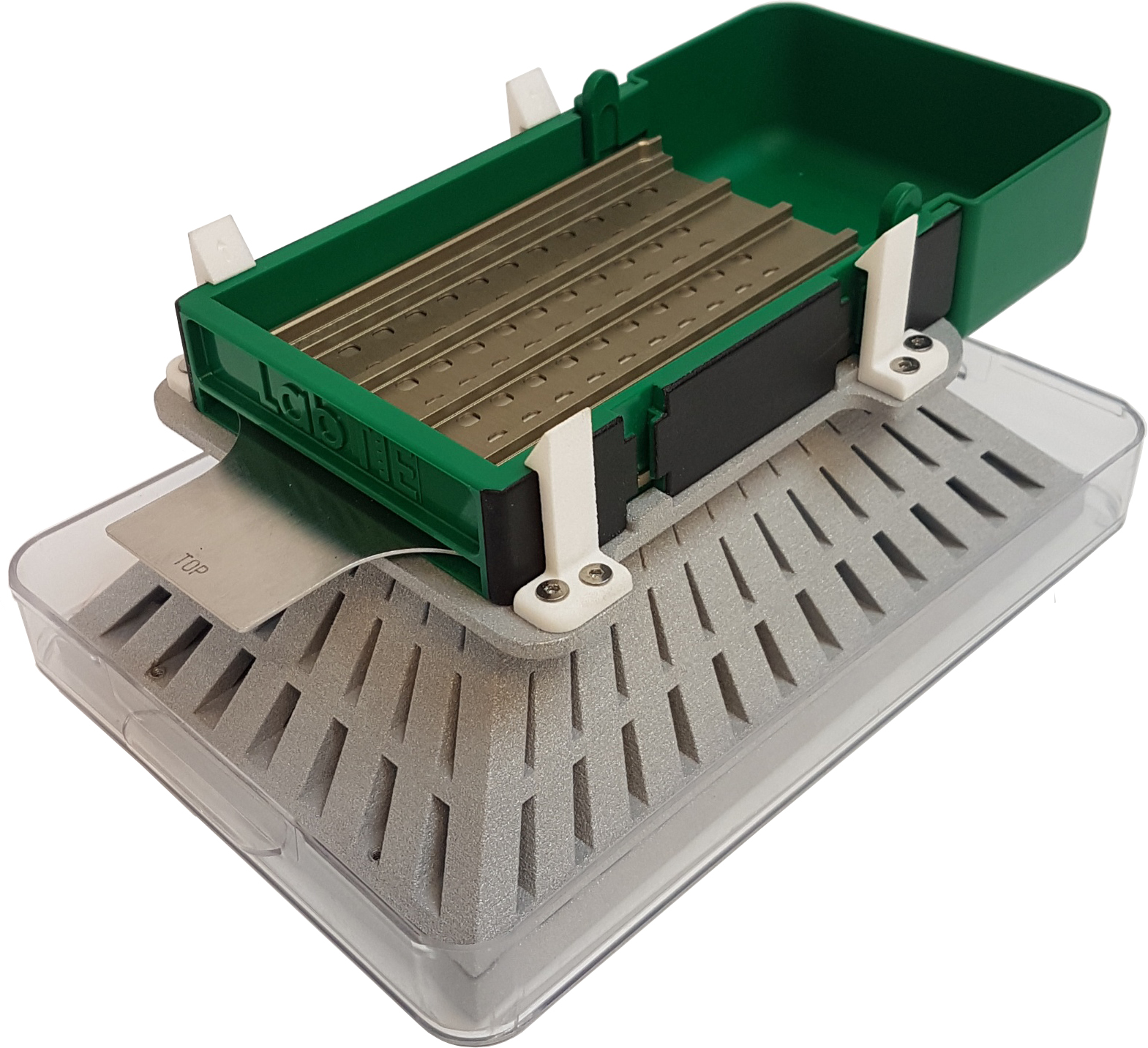
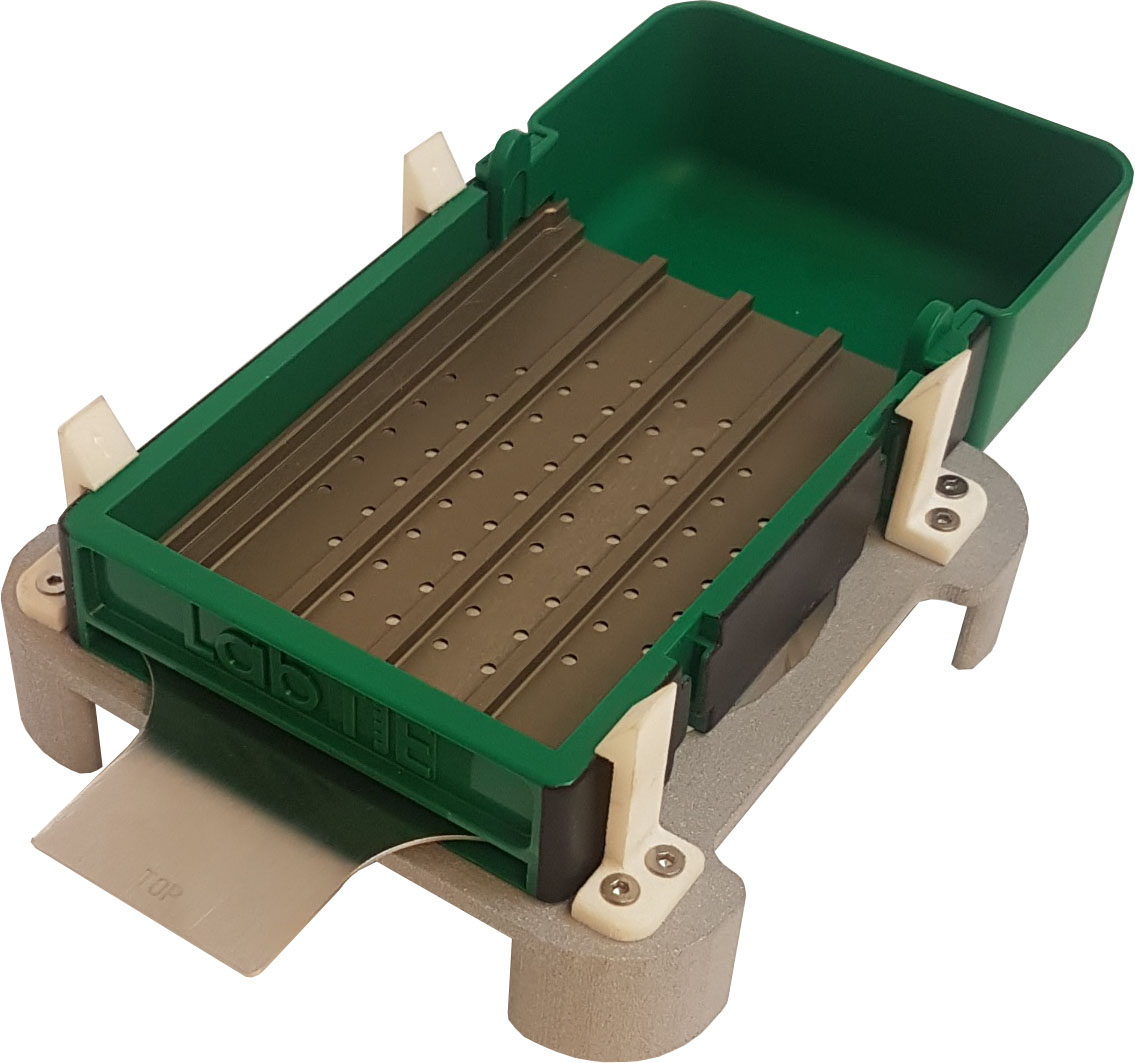
A seed dispenser loads a precise, uniform pattern of seeds into a tray, plate or dish in a single action. Instead of placing seeds one by one with tweezers or a vacuum head, you fill the dispenser, choose the mesh plate that matches your seed, and pull the slider: the seeds drop into position in seconds.
The LabTIE Seed Dispenser is a manual, modular system with exchangeable anodized-aluminium mesh plates. It handles more than 120 seed types, including difficult small or irregular seeds such as lettuce, onion, tomato, paprika and Arabidopsis thaliana, and dispenses 100 seeds onto a blot-paper tray in about 30 seconds.
Dispensing vs. vacuum & manual
Why dispense instead of a vacuum seeder
Hand-placing seeds is slow and inconsistent, and vacuum seed systems struggle with small, light or irregular seeds and need a suction head and pump for every pattern. A mesh-plate dispenser drops a full 100-seed pattern in one pull, with no vacuum, no electricity and no seed damage. Swap the mesh plate to change seed type or container: it was developed to replace vacuum seed dispensers and inefficient robotic dispensers.
Step by step
How a seed-dispensing run works
Four steps from loose seeds to a loaded tray. The dispenser handles the slow, error-prone placement step.
01
Fill the dispenser
Pour your seeds into the dispenser and give it a gentle shake so every mesh position picks up a seed.
02
Select the mesh plate
Insert the mesh plate matched to your seed size and container. Over 85 plate types cover 120+ seed types.
03
Pull the slider
Pull the slider and the seeds drop into a uniform pattern in a tray, dish, plate or tubes in about 30 seconds.
04
Transfer & assay
Move the tray to germination, or take the seeds straight into bead beating for seed DNA extraction.
Formats
LabTIE seed dispensers, every format
Swap the mesh plate to match your container, from blot-paper germination trays to 96-well genotyping. Tap any format to view it on LabTIE.
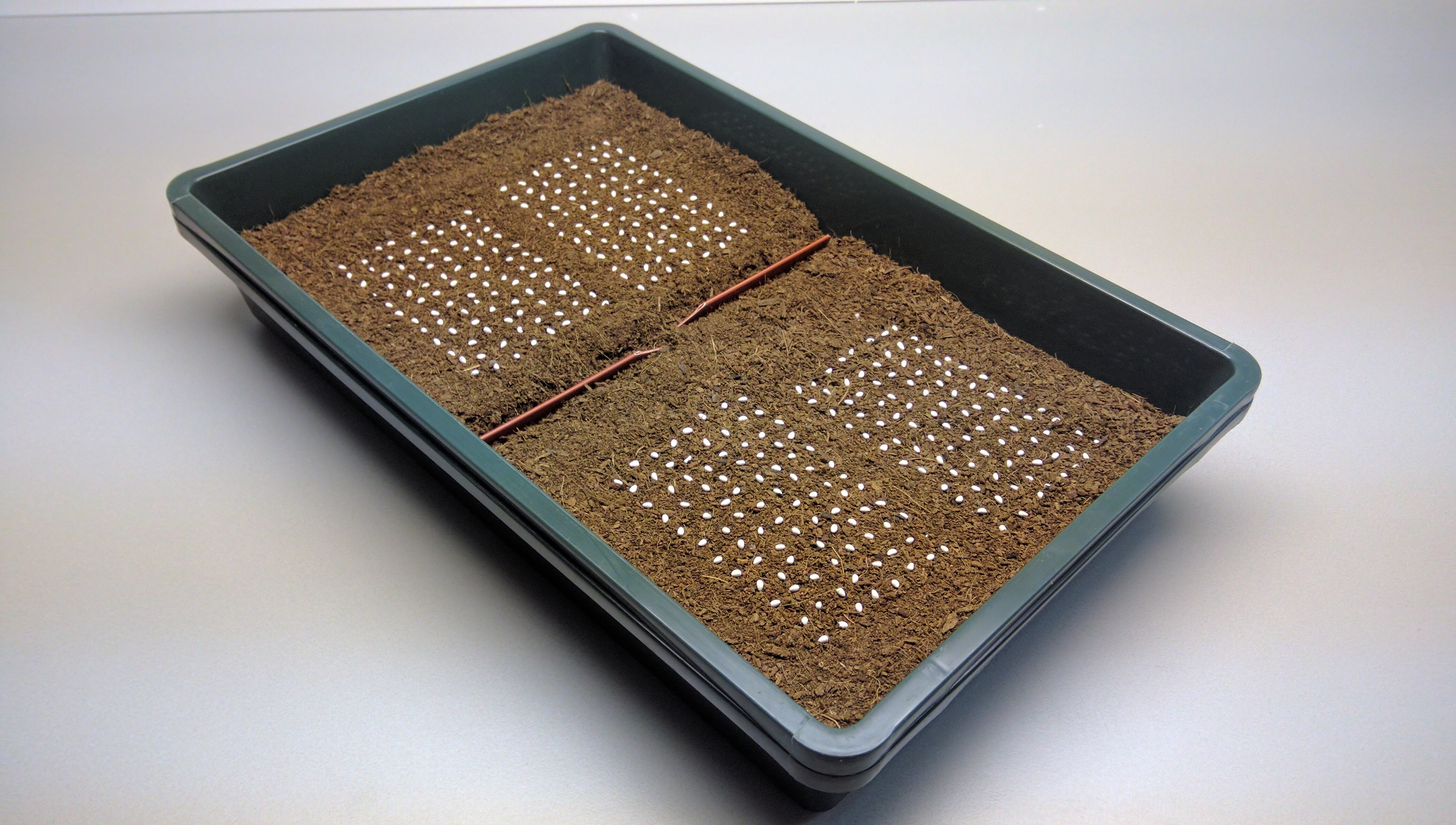
Germination tray
100 seeds on blot paper
Petri dish
Sterile plate germination
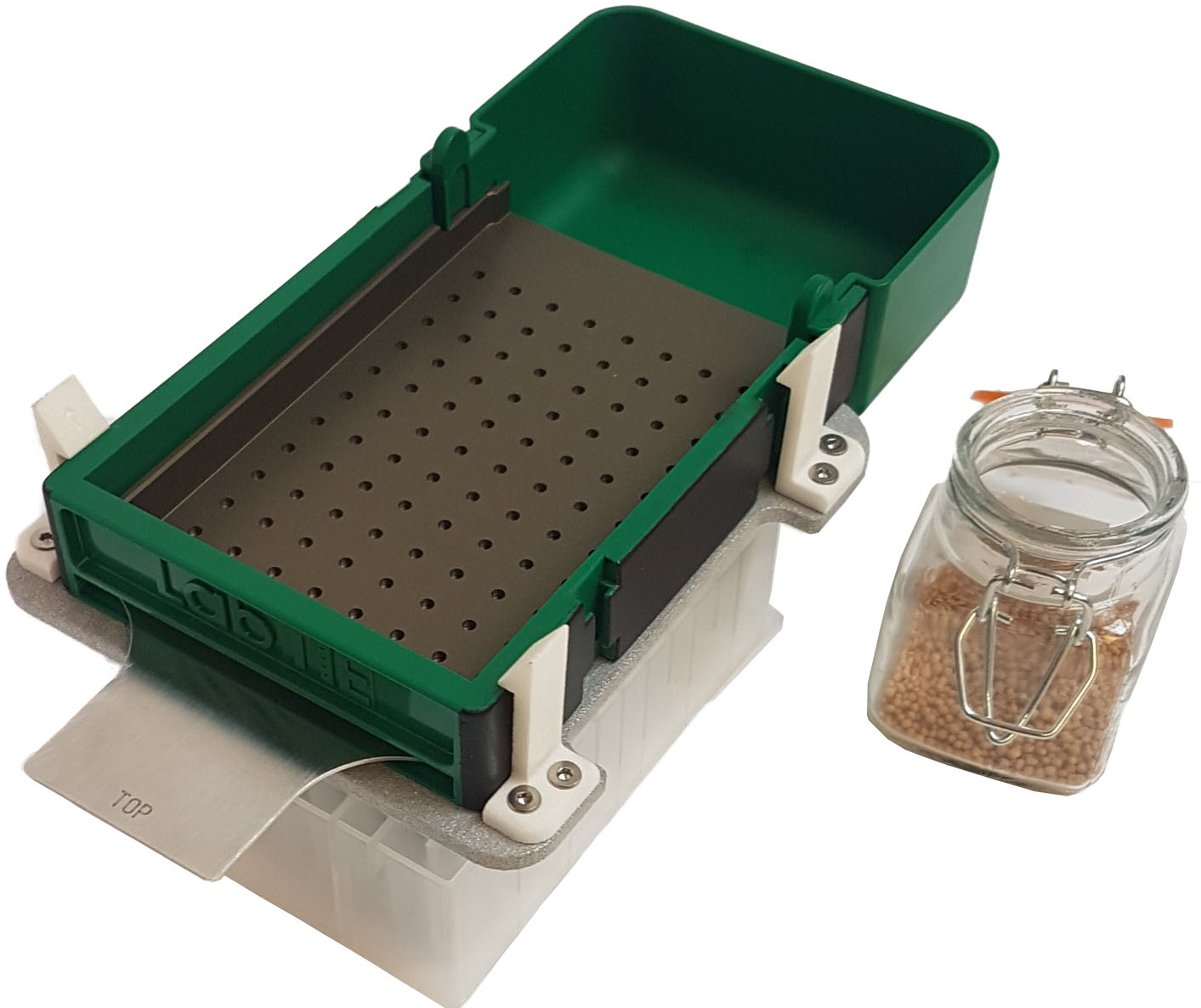
96-well plate
High-throughput genotyping
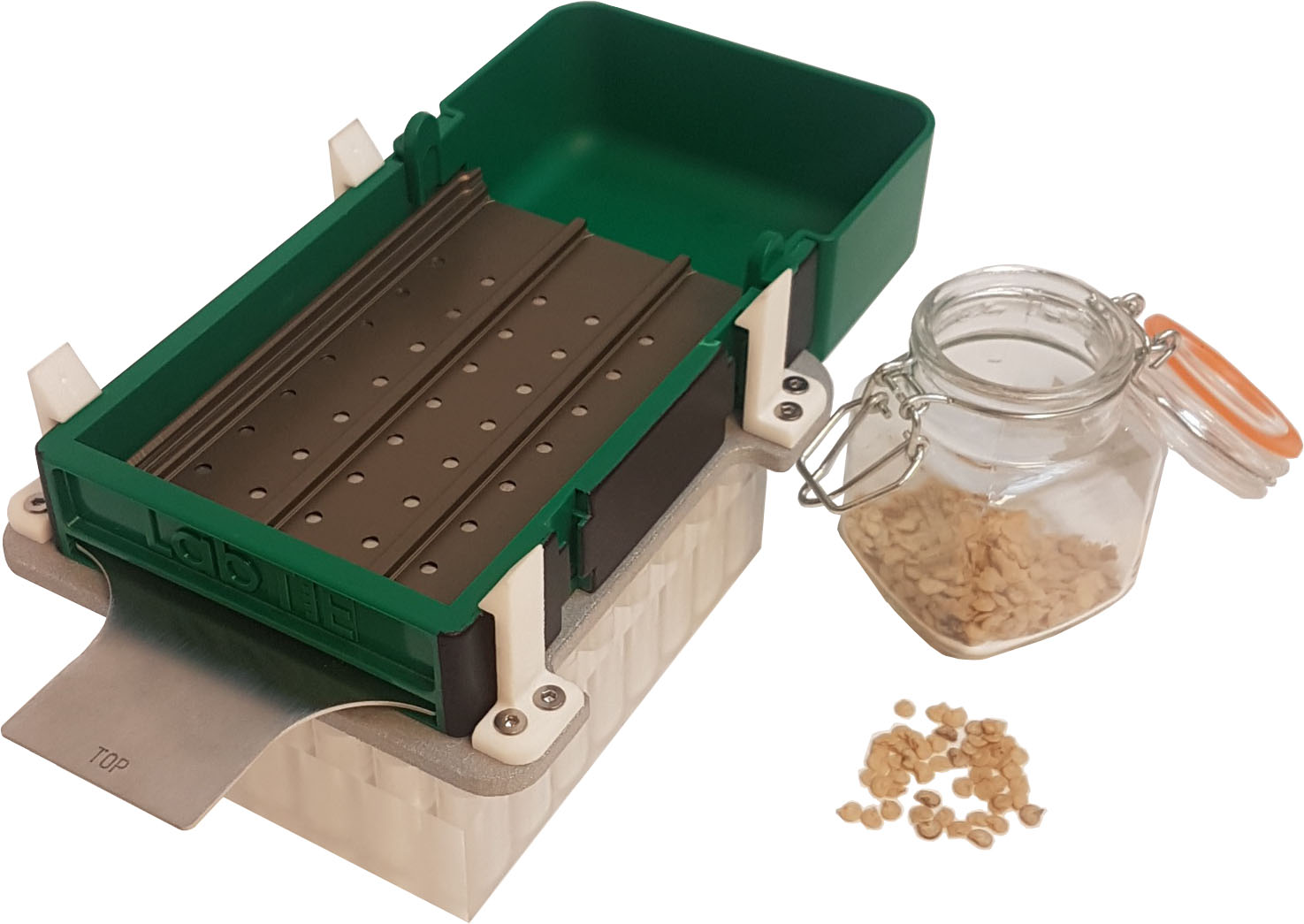
Tubes & vials
Seed DNA extraction
Funding
$1,000 lab equipment grant for seed dispensers
LabTIE International B.V., which manufactures the dispensers described in this guide and publishes this site, funds ten $1,000 awards toward seed, bead and powder dispensing equipment. Applications close 31 December 2026. See the $1,000 lab equipment grant criteria and terms, or compare hardware first in the top 4 seed dispensers comparison.
Ready to dispense seeds the same way every time?
Send us your seed type, container format and throughput and we will come back with a recommended mesh-plate configuration.
 Seed Dispensers